Custom Network Builds
Route design, construction, and delivery for projects that cannot be satisfied by an off-the-shelf connection or the existing network alone.
Know what you control and what we own.
Final responsibilities are defined in the executed agreement and route design. These are the operating principles DRDI uses to frame the first technical conversation.
- What exactly is provided?
- DRDI develops a project-specific scope that can include feasibility, route engineering, permitting, civil construction, conduit, fiber placement, splicing, testing, facility entrance coordination, and ongoing maintenance.
- Who owns the optics?
- Optical ownership follows the chosen model. The customer may operate its own optics over dark fiber, or the parties can define a broader turnkey scope with approved technology partners.
- Lease versus IRU options
- Custom builds can support lease, IRU, customer-funded construction, milestone-based project agreements, or blended structures. The final model follows asset ownership and risk allocation.
- Fiber-pair and conduit options
- Fiber-pair, cable, and conduit quantities are sized for the customer’s current design and credible expansion plan, with reserve capacity addressed explicitly rather than assumed.
- Diversity and entrance options
- The project begins with physical route analysis. Separate entrances, alternate corridors, controlled crossings, and shared-risk points are documented before diversity is represented.
- Construction responsibilities
- DRDI acts as the accountable infrastructure lead across route design, permitting, utility coordination, construction, restoration, acceptance testing, and facility handoff.
- Maintenance responsibilities
- Ongoing responsibilities are documented by asset and layer. DRDI can provide route maintenance and escalation coordination after acceptance, while customer-owned electronics remain customer controlled.
Construction quality becomes operating confidence.
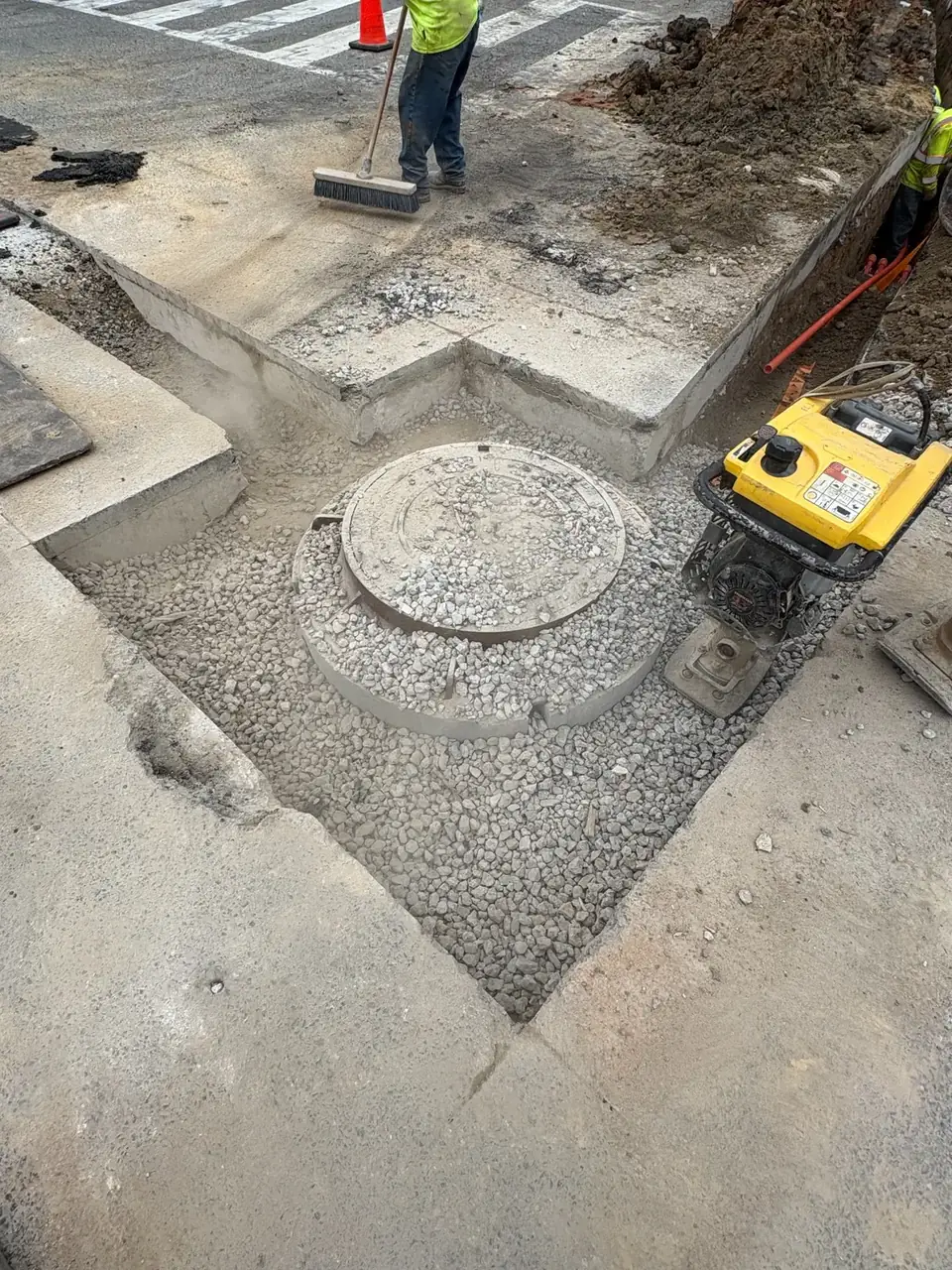
Custom work is not complete at placement. DRDI coordinates the civil path, underground access, restoration, testing, records, and handoff so the finished asset is maintainable from day one.
Plan the asset through its full lifecycle.
Route engineering, access structures, conduit continuity, restoration standards, acceptance testing, and maintenance ownership work together as one delivery system, not disconnected scopes.
Selected construction imagery from DRDI field workOne accountable path from feasibility to operations.
Qualified on-net projects target a 30-day delivery following technical and commercial approval. Construction-dependent projects follow a project-specific schedule.
Route review
Confirm endpoints, proximity, facility access, and shared-risk constraints.
Technical design
Define fiber or conduit quantity, entrances, handoffs, testing, and responsibilities.
Commercial structure
Select lease, IRU, construction funding, term, and acceptance milestones.
Delivery
Complete make-ready, construction, splicing, testing, documentation, and turn-up.
Operate
Monitor the route, maintain agreed assets, and use the named escalation path.
Where Custom Network Builds makes the most sense.
- New data-center campuses
- Municipal and regional networks
- Enterprise campus interconnection
- Carrier extensions
- Utility and infrastructure modernization
No generic rate card for a physical route.
Pricing begins with verified endpoints and a defined operating model. The following inputs shape the final proposal.
- Route feasibility and civil complexity
- Permitting jurisdictions
- Materials and capacity design
- Schedule and construction windows
- Facility entrance requirements
- Ongoing maintenance scope
Put custom network builds against a real route.
Start with the locations and operating requirements. DRDI will identify the workable physical path, responsibilities, delivery assumptions, and commercial structure.